To be Vietnam's leading CNSL supplier to the global biofuel industry: a stable, transparent, fully traceable feedstock source working toward ISCC EU sustainability certification.
It starts with a shell everyone throws away
Why is the green fuel industry turning to Vietnamese cashew shells?
Every cashew you eat leaves behind a hard, bitter shell holding an oil caustic enough to burn bare skin. For years that shell was simply burned or dumped. Yet the dark oil inside, CNSL, is now being turned by refineries into renewable diesel and jet fuel. Binh An Biofuel built its plant in the heart of Vietnam's cashew country to collect it, extract it and take it to the world.
“Living Green, Living Whole”
Vision, mission, commitment
Turning discarded cashew shells into green fuel for the world
Cashew shells are usually burned or dumped after processing. Turned into CNSL, they solve the industry's waste problem and cut transport CO₂ at the same time.
Replace fossil fuels with biofuels made from Vietnamese farm waste, while adding value for cashew farmers.
- Shell oil becomes CNSL; the pressed cake becomes biomass pellets
- A residue that takes no land from food crops
- Less fossil CO₂ from cars, aircraft and ships
Right quality, right quantity, on time. Every lot comes with a COA, a retained sample and shell-origin records.
Application
Biofuels first, bio-based chemicals for added value
At the refinery, CNSL is hydrotreated into fuels that run in existing engines.
HVORenewable dieselReplaces fossil diesel in cars, trucks and buses with no engine changes.
SAFSustainable aviation fuelBlended with Jet A-1 to cut emissions from flights.
Bio-bunkerMarine biofuelCo-processed at the refinery into on-spec ship fuel.
European market
Europe mandates more renewable fuel and favours residue feedstocks
ReFuelEU Aviation
Minimum SAF share required at EU airports
20252%
20306%
203520%
204034%
204542%
205070%
Alongside it, RED III targets 29% renewable energy in transport by 2030, and FuelEU Maritime requires ships to cut the emission intensity of their fuel step by step to 2050.
Industry signals
ISCC EUCNSL is on the material listClassified as a residue under RED II, flagged for aviation and maritime use.
2025HVO trial from cashew shell oil in EuropeA Central European refinery has trialled co-processing cashew shell oil into HVO; the product met fuel specifications.
MarineVLSFO co-processed with CNSLShip fuel co-processed with CNSL has been supplied commercially at major Asian ports, serving routes to Europe.
R&DResearch on hydrotreating CNSL to green dieselPublished studies convert CNSL into diesel- and jet-range hydrocarbons.
Other uses
Bio-based chemicals from CNSL
Automotive
Friction materials
Binder resin and friction dust for brake pads and clutch facings; heat-resistant with low noise and wear.
Chemicals
Paints & coatings
Adds gloss, durability, corrosion resistance and adhesion; used in anti-termite wood coatings.
Chemicals
Phenolic & epoxy resins
Replaces petroleum phenol in phenol-formaldehyde resins and phenalkamine curing agents.
Chemicals
Distilled cardanol & additives
Raw material for distilled cardanol, surfactants, rubber additives and adhesives.
Sources: ISCC EU Material List 2026; ReFuelEU Aviation Regulation (EU) 2023/2405; RED III Directive (EU) 2023/2413; biofuel industry news.
Production process
Five steps from a pile of shells to an export shipment
At our plant in Phu Trung, Dong Nai, every batch of shells passes through five steps before it leaves the gate.
-
Shell sourcing
Shells are bought from local cashew processors and checked for moisture and foreign matter.
-
Pressing
Screw presses separate raw oil from the shell; the cake goes on to biomass pelleting.
-
Heat treatment
Raw oil is heated so anacardic acid decarboxylates into cardanol, releasing CO₂.
-
Filtering & testing
Settling, filtering and de-watering, then lot sampling and a COA for each lot.
-
Packing & delivery
Loaded into flexibags, ISO tanks or tanker trucks and delivered to your plant or the port.
Product
Green feedstock for biofuels and bio-based chemicals
No part of the shell is wasted: the oil becomes CNSL, the cake becomes biomass pellets.
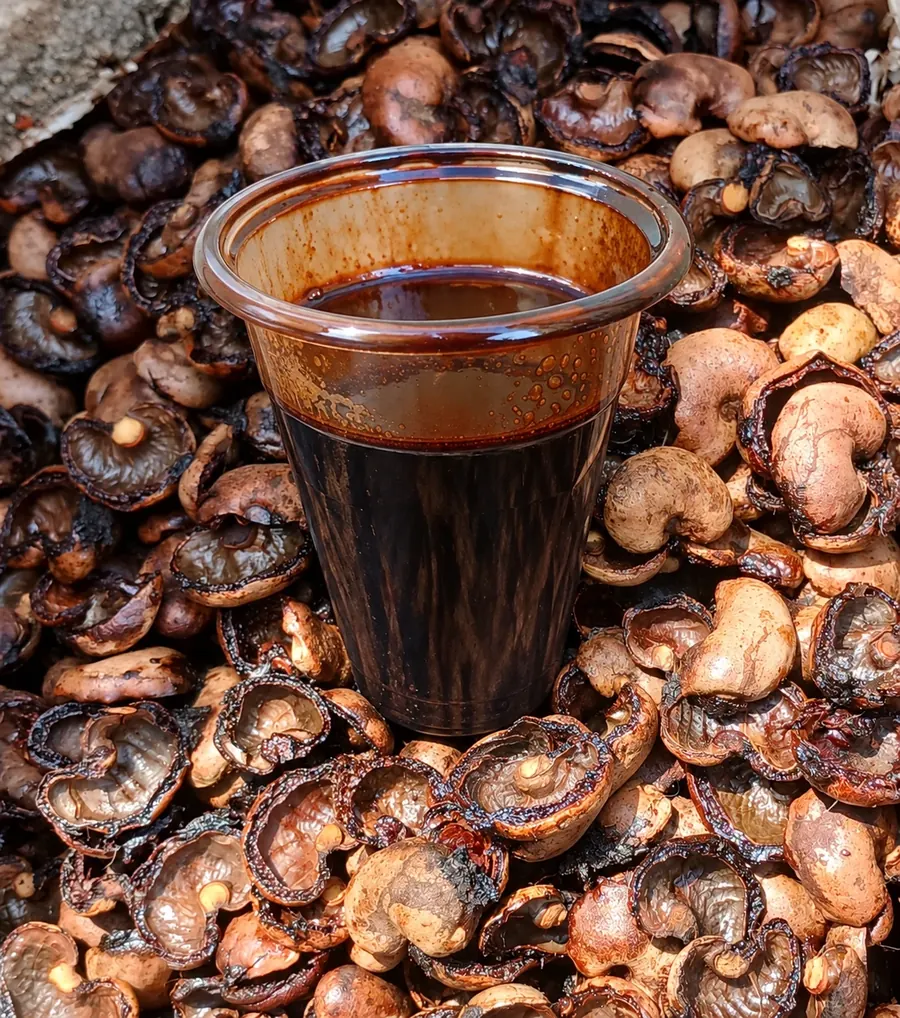
Refined CNSL (Crude Cardanol)
Refined CNSL pressed from cashew nut shells, heat-treated and filtered, with more than 70% cardanol. A feedstock for HVO, SAF and marine biofuel, replacing fossil diesel and jet fuel.
- Non-food residue under RED II
- Over 70% cardanol, low sulphur, controlled moisture and impurities
- Shell origin traceable to each processor
- Consistent lot to lot, with COA & MSDS
CAS 8007-24-7HS 1302.19Cardanol > 70%
Full specification and lab results →
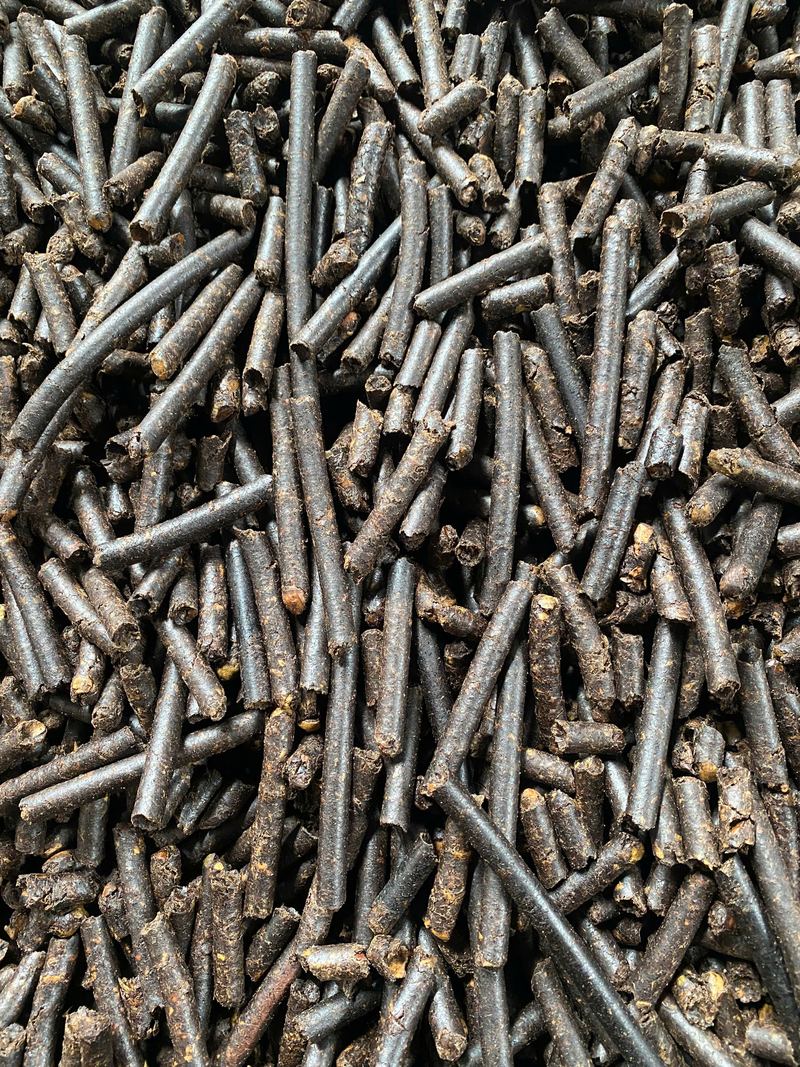
Cashew shell cake pellets
After pressing, the de-oiled shell cake is compressed into uniform pellets, a biomass fuel that replaces coal in industrial boilers. The whole shell is used, with nothing left as waste.
- Replaces coal in boilers
- Easy to transport and store
Packing Jumbo bag
Product quality
Every lot of CNSL has to pass these tests
Controlled from incoming shells to the finished tank. A lot ships only when it meets every parameter.
INIncoming shell inspectionMoisture, foreign matter, origin
LABLab analysis of every lotUsing ASTM methods
KEEPRetained reference sampleKept for at least 6 months after delivery
3rdIndependent inspection on requestSGS · Intertek · Vinacontrol
DOCCOA · MSDS · C/O · TDSComplete for export clearance
| Parameter | Typical value | Method |
|---|---|---|
| Physical properties | ||
| Appearance | Dark brown liquid | Visual |
| Specific gravity @ 30°C | 0.95 – 0.97 | ASTM D1298 |
| Viscosity @ 30°C | ≤ 550 cP | ASTM D445 |
| Moisture | ≤ 1.0 % | ASTM D95 |
| Insoluble matter | ≤ 1.0 % | ASTM D473 |
| Chemical composition | ||
| Cardanol | > 70 % | HPLC |
| Cardol | 10 – 15 % | HPLC |
| Polymeric material | ≤ 15 % | HPLC |
| Iodine value | ≥ 250 g I₂/100 g | Wijs |
| Acid value | ≤ 10 mg KOH/g | ASTM D664 |
| Refinery & biofuel-producer parameters | ||
| Gross calorific value | ≥ 9,000 kcal/kg | ASTM D240 |
| Flash point (closed cup) | ≥ 200 °C | ASTM D93 |
| Sulphur content | ≤ 0.1 % | ASTM D4294 |
| Ash content | ≤ 1.0 % | ASTM D482 |
Typical values; can be adjusted to buyer specification. Binding results are those on each lot's COA.
See the independent SGS Vietnam test report (31 July 2025) →
Why Binh An
What Binh An brings to its partners
Right at the raw material source
Year-round shell supply and low inbound freight.
Full traceability
Shell origin recorded per processor, supporting sustainability certification for the European market.
Export-ready
ISO tanks, flexibags and complete paperwork for European and Asian ports.
Flexible orders
From single domestic loads to long-term export contracts.
Packing & logistics
From our plant to your port
FlexibagBladder inside a 20' container, the standard for export
~20 MT
ISO tankStandard stainless ISO tank, sealed and clean
20–24 MT
Tanker truckDoor delivery to domestic plants
On request
Terms: EXW, FOB Cat Lai port (Ho Chi Minh City), CIF/CFR destination port. Payment by T/T or L/C.
FAQ
Questions our partners often ask
Is CNSL the same as crude cardanol?
Refined CNSL has been heat-treated and filtered, so cardanol is its main component; the trade often calls it crude cardanol. Distilled cardanol is the product of vacuum-distilling CNSL.
How is CNSL turned into HVO and SAF?
At the refinery, CNSL is hydrotreated to remove oxygen, turning cardanol into hydrocarbons that behave like diesel and jet fuel. It can also be co-processed with fossil feedstock in existing units. The products are HVO (renewable diesel), SAF (sustainable aviation fuel) and marine biofuel.
Is CNSL recognised as a sustainable feedstock in Europe?
The ISCC EU material list classifies CNSL as a residue under the Renewable Energy Directive (RED II), flagged for aviation and maritime use. To count toward targets the supply chain must be certified; we provide shell-origin records to support that process.
Can I get a sample?
Yes. We send 1–5 litre samples with a COA so you can test before ordering.
What is the minimum order?
Export: one 20' container (flexibag or ISO tank). Domestic: delivered by tanker truck; contact us for details.
What is the lead time?
Typically 7–15 days from order confirmation, depending on volume and vessel schedule.
Contact
Start working with Binh An
Tell us the product, quantity and destination. Our sales team will reply within 24 hours with pricing and a sample COA.
CompanyBinh An Biofuel Joint Stock Company
Factory addressDT759 Road, Bau Dia Hamlet, Phu Trung Commune, Dong Nai City, VietnamFormer address: Phuoc Tan Commune, Phu Rieng District, Binh Phuoc Province
Hotline · Zalo · WhatsApp · WeChat0392 678 626 (+84 392 678 626)
Websitebinhanbiofuel.com